
Table of Contents
- What Every Buyer Needs to Know to Prepare, Plan, and Purchase With Confidence.
- What Buyers Should Know Before Buying a Home in 2026
- Your Financial Readiness
- Your Education and Preparation
- Your Team (Lender and Realtor)
- Your Timeline and Motivation
- Step 1 — Understand Your Buying Power
- Understanding Your Credit Score
- How to Improve Your Credit Over the Next 3–6 Months
- Step 2 — Get Financially Ready for 2026
- Down Payment Options (Clear, Detailed, Empowering)
- Down Payment Assistance in Illinois: What It Is & Why It Matters
- Understanding Closing Costs (Explained Simply & Clearly)
- Understanding Your Monthly Mortgage Payment (Explained Clearly + Simply)
- Step 3 — Get Pre-Approved (Not Pre-Qualified)
- Step 4 — Choose the Right Realtor
What Every Buyer Needs to Know to Prepare, Plan, and Purchase With Confidence.
If you’re thinking about buying a home in 2026, the truth is this: your preparation starts now.
Over the past few years, the real estate market has stretched buyers, confused buyers, and—if we’re being honest—scared quite a few buyers away. But the reality for 2026 is far more empowering than most people realize. Buyers who take the next 30–90 days to prepare will be in the strongest position next year.
Whether you’re a first-time buyer, first-generation wealth builder, renter tired of rising rents, or someone returning to the market after a break (my personal story), this guide was created for you. As a South Suburbs / Southwest Suburbs Illinois Realtor, I’ve seen firsthand the difference that early education and proper preparation make—not just in purchasing power, but in confidence. And as a home owner, I have personally experienced how intimidating the home buying process can be.
I wrote this guide for the person who is like me. I didn’t know a realtor when we bought our first house. I didn’t know who to go to for guidance and to answer questions. I was lost and I really hoped the Realtor we connected with knew what they were doing because I sure didn’t.
In this guide, you’re going to get the real steps, the real timelines, and the real insider strategies to help you buy with clarity, certainty and confidence in 2026.
Let’s get started.
This is your practical, plain-language guide to buying a home in 2026 — especially if you’re a first-time or first-generation buyer.
What Buyers Should Know Before Buying a Home in 2026
The real estate market is always changing — interest rates shift, inventory rises or falls, and economic factors move in cycles. But here’s the truth most people don’t hear enough:
You can’t control the market. You can only control how prepared you are for it.
Instead of trying to time the market or wait for “perfect conditions,” the most empowered buyers focus on the four things they can control:
1. Your Financial Readiness
You control:
- your credit habits
- your savings plan
- your debt management
- your employment stability
- your monthly budget
These are the things that determine your buying power regardless of what the market is doing.
2. Your Education and Preparation
The better a buyer understands:
- the buying process
- their loan options
- taxes and closing costs
- what to expect at each stage
…the more confident and successful they become.
Preparation removes fear. Education creates clarity. Clarity leads to strong decisions.
3. Your Team (Lender and Realtor)
The quality of your homebuying experience is directly shaped by the professionals guiding you.
You can control:
- who you choose
- who you trust
- who explains the process clearly
- who advocates for you
- who negotiates for you
Having the right team matters in any market.
4. Your Timeline and Motivation
You get to decide:
- when to start saving
- when to get pre-approved
- when to start touring homes
- when you’re truly ready
Instead of waiting for rates or market headlines, buyers who make progress focus on building their own timeline.
When you are ready, the market becomes a backdrop—not the decision-maker.
Step 1 — Understand Your Buying Power
Buying power is the foundation of your homebuying journey. It includes your income, credit score, debt, savings, and loan options—all factors you can actively strengthen. In other words, buying power is knowing how much house you can afford.
Understanding Your Credit Score
You do NOT need an 800 credit score to buy a home and you do NOT need perfect credit.
Here’s the truth:
- 640+ can qualify you for down payment assistance
- 620+ can qualify for many loan programs.
- 580+ may still qualify with certain FHA options.
- 680+ positions you stronger.
- 720+ may lower your interest rate.
What’s important to understand is consistency, responsible usage, payment history, credit utilization, and avoiding late payments all matter when working to improve your credit score.
Scores in the 600s and 700s are common among everyday buyers.
How to Improve Your Credit Over the Next 3–6 Months
- Pay down revolving balances
- Avoid opening new debt unnecessarily
- Set up automatic payments
- Keep utilization low
- Review your credit reports for accuracy
Small changes make a big difference.

💬 Behind the Numbers: My Own Journey
When my husband and I were preparing to buy our home, I remember sitting at the kitchen table staring at our credit reports… absolutely overwhelmed.
I didn’t know where to start.
Should we pay this card off?
Should we close this account?
Should we put extra money toward this loan?
I was trying so hard to “fix” things, but I had no idea if I was fixing the right things.
And then our lender did something that literally changed our entire homebuying journey.
They sat down with us, looked at our actual balances, and said:
“Let me show you exactly where to focus — this account, this amount, this impact.”
They broke it down line by line and showed us how paying specific amounts on specific accounts would move our credit scores to the exact number we needed. I’ll never forget that feeling — like someone finally turned the lights on.
Up until that moment, I had been guessing.
Trying. Hoping. Worrying.
But guessing your way through credit doesn’t work.
Strategy does.
That conversation saved us months of frustration and put us in a much stronger position to buy our home.
And that’s why I tell my clients this every single time:
Before you start paying off debts, moving money around, or trying to repair your credit on your own — talk to a lender.
Ask them:
➡️ “Which accounts will make the biggest impact on my score?”
➡️ “Where should I focus my efforts first?”
A good lender will tell you exactly where to start, so none of your energy is wasted.
That one conversation changed my life — and it can change your buying power, too.
Need a Lender Recommendation?
If you don’t already have a lender you trust, I can connect you with a few local professionals who are patient, experienced, and great at breaking things down clearly.
You’re never required to use anyone I suggest — I just want you to have the support you deserve as you prepare to buy your home.
Step 2 — Get Financially Ready for 2026
1. Down Payment Options (Clear, Detailed, Empowering)
You don’t need tens of thousand of dollars saved, and you don’t need a massive down payment to buy a home. Whay you do need is a clear understanding what your options truly are. Most people are shocked when they learn that buying a home is more accessible than they’ve been led to believe. For years, the myth of “20% down or nothing” has stopped people before they even get started — especially first-time buyers and first-gen buyers who didn’t grow up hearing the details of how homeownership actually works.
Let’s break down what down payments really look like, in a way that’s simple and honest.
▶ What a Down Payment Actually Is
A down payment is simply the portion of the home’s price that you pay upfront.
The rest is financed through your mortgage, meaning a lender loans you the remaining amount that your home costs.
It’s not a penalty.
It’s not a “rich people requirement.”
It’s just the starting point of your loan.
And the amount you need is almost always smaller than what people assume.
▶ You Do Not Need 20% Down
Many buyers — especially first-time buyers — still believe that a 20% down payment is required. That’s outdated.
In today’s world, the majority of buyers put far less down.
▶ Different Types of Loans and How Much of a Down Payment Is Required
FHA Loans: Low Down Payments, Flexible Credit
FHA loans were created to make homeownership more affordable.
They typically require around 3.5% down, and they are especially friendly for buyers who:
- are purchasing their first home
- have moderate credit
- need a more flexible path into homeownership
This is a common and powerful option for everyday working families.
Conventional Loans: Often Just 3–5% Down
Many people assume conventional loans require large down payments, but that isn’t always true.
For eligible buyers, conventional loans can require as little as 3%–5% down — especially for:
- first-time buyers
- buyers with stable income
- buyers with stronger credit profiles
These loans can also help reduce long-term costs depending on the buyer’s situation.
VA Loans: 0% Down for Eligible Buyers
If you are active-duty military, a veteran, or eligible through service, a VA loan may allow you to buy a home with 0% down.
This is one of the most powerful loan programs available, and it exists specifically to honor those who have served.
So How Do You Know Which One You Qualify For?
Your down payment amount is shaped by a few key factors:
- Loan type (FHA, Conventional, VA, etc.)
- Your credit (not perfect — just your current profile)
- The property type (single-family, condo, multi-family)
What matters most is having someone who explains your options clearly — not in jargon, not in pressure, but in plain language that empowers you to make confident decisions.
💬 A Personal Story
Buying a home is emotional. It’s personal. And it’s easy to feel embarrassed or unsure about what you don’t know — even with family and friends.
A good friend of mine recently shared how overwhelming the homebuying process felt for him — not because he wasn’t capable, but because no one had ever taken the time to explain things in a way that made sense. When he started exploring his own homebuying journey, he didn’t feel ready to open up at first. He didn’t want to feel judged or overwhelmed. And honestly? I understood that.
But once he connected with a lender and began asking questions — the real ones, the honest ones — I was able to explain things in a way that finally made everything make sense.
He went from overwhelmed…
to informed.
From anxious…
to relieved.
From unsure…
to hopeful.
He looked at me and said, “Thank you for helping me understand. It doesn’t feel as scary anymore.”
That’s exactly how I want you to feel while reading this guide.
You deserve clarity.
You deserve someone who breaks things down without judgment.
And you deserve to approach 2026 with confidence, not confusion.
2. Down Payment Assistance in Illinois: What It Is & Why It Matters
One of the biggest myths in homebuying is the belief that you need a large down payment saved before you can qualify for a mortgage. The truth is that Illinois offers several down payment assistance programs designed to help everyday buyers become homeowners — especially first-time buyers, first-generation buyers, and buyers with stable income but limited savings.
These programs can make homeownership more accessible, and many buyers never hear about them simply because they didn’t know to ask.
Let’s break it down in simple terms.
What Is Down Payment Assistance?
Down payment assistance (often called “DPA”) is financial support that helps you cover:
- part of your down payment
- part of your closing costs
- or a combination of both
This assistance can come in different forms, such as:
- grants (money that may not need to be repaid)
- forgivable loans (loan amounts that reduce over time)
- deferred loans (no payments until you sell or refinance)
The goal is simple: to help you get into a home sooner by reducing the amount of money you need upfront.
How Down Payment Assistance Works
Most programs work by partnering directly with approved mortgage lenders. When you apply for your mortgage, your lender reviews whether you qualify for an assistance option and whether the program can be combined with your loan type.
In many cases:
- You apply through your lender
- The assistance is added to your loan package
- The funds are applied at closing to reduce your out-of-pocket costs
You don’t have to apply separately to multiple agencies — your lender helps guide you through it.
Who Offers These Programs?
A. The Illinois Housing Development Authority (IHDA)
IHDA is one of the most well-known sources of homeowner assistance in the state. They offer several programs throughout the year aimed at:
- first-time buyers
- repeat buyers
- buyers with moderate income
- buyers needing help with down payments or closing costs
IHDA programs typically work through participating lenders — not directly with the public — which means your lender will walk you through the requirements.
B. Mortgage Lenders, Local Banks & Credit Unions
Many lenders have their own internal down payment assistance programs or partnerships with national organizations. These may include:
- bank-sponsored grants
- programs for certain professions (teachers, first responders, etc.)
- savings-matching programs
- community reinvestment programs
- lender credits that can reduce closing costs
Buyers often miss out on these simply because they didn’t ask.
Who Qualifies for Down Payment Assistance?
Requirements vary by program, but common qualifications may include:
- meeting income guidelines
- meeting purchase price limits
- being a first-time buyer (or not owning a home in the past 3 years)
- completing a homebuyer education course
- working with an approved lender
- having a qualifying credit score
Each program is unique, which is why speaking with a lender early helps you understand what you qualify for.
Why This Helps Your Buying Power
Down payment assistance doesn’t just reduce your upfront costs — it can also:
- help you get into a home sooner
- free up savings for emergencies or repairs
- widen the number of homes you can consider
- lower the financial stress of buying
Many buyers are shocked to learn they qualify for programs they didn’t even know existed.
The Bottom Line
Down payment assistance programs are real, accessible, and designed for buyers just like you — but they’re not automatically offered. If buying a home is your 2026 goal, make sure to ask your lender:
- “Do you offer any down payment or closing cost assistance programs?”
- “Am I eligible for IHDA programs?”
- “Are there grants or credits available through your bank?”
A single conversation can increase your buying power and open doors you didn’t know were available.
3. Understanding Closing Costs (Explained Simply & Clearly)
Most buyers — including people who bought before — know closing costs exist, but they don’t really know what they are or why they’re necessary. And that’s completely normal. Most people sit at the closing table, sign a stack of papers, and walk away still unsure what they actually paid for. Let’s break it down in a way that actually makes sense.
What Are Closing Costs?
Every homeowner pays them — even cash buyers. Closing costs are the fees and expenses required to officially complete your home purchase. Think of them as the administrative and legal steps needed to transfer ownership of the home safely and correctly.
They cover things like:
- Lender fees — cost of processing your loan
- Appraisal — to confirm the value of the home
- Attorney fees (common in Illinois)
- Title company fees — ensuring the home does not have legal issues attached
- Title insurance — protection in case something was missed
- Recording fees — paid to the county to formally register the property in your name
- Prepaid taxes & insurance — your first installments toward property taxes & homeowners insurance
- Escrow setup — the account your lender uses to pay future taxes/insurance on your behalf
Why Closing Costs Exist
When you buy a home, you’re not just buying walls and a roof. You are transferring legal ownership, taking on financial responsibility, and becoming part of the public record in your county. Closing costs exist because several important steps must happen behind the scenes to protect you, protect the lender, and make the sale official.
Here’s what that really means:
A. The home must be legally cleared before you receive the keys.
A title company reviews decades of property history to confirm that the seller truly owns the home—and that no one else has a legal claim to it. This protects you from future disputes. You receive something called a title. Think of the title as the legal document — the official proof — that the home belongs to you.
But before you can receive clean ownership, the title company has to verify that:
- the seller is the true legal owner
- there are no unpaid debts tied to the property
- no one else has a claim or lien against the home
- there are no hidden legal issues that could threaten your ownership
This is where title searches, title insurance, and attorney reviews come in — and these are part of your closing costs. They protect you from buying a home with unresolved legal problems.
B. The title must be insured and transferred properly.
Title insurance is part of closing costs because it protects you and the lender from hidden issues that might appear later, like old liens, unpaid taxes, or recording errors. It’s one of the most important forms of protection you’ll receive. This step in the process is meant to make sure the title is clean. A clean title means:
- no legal disputes
- no unpaid property taxes
- no unpaid contractors
- no unknown heirs claiming rights
- no previous mortgages still attached
If any of these issues exist, they must be resolved before the home can legally be transferred to you. Your closing costs pay the professionals who investigate and guarantee the property’s legal safety.
C. The loan must be processed, verified, and finalized.
Your lender isn’t just giving you money—they’re underwriting the entire purchase. They review income, verify employment, send the loan for final approval, and prepare the documents you’ll sign on closing day. This administrative work is part of your closing costs. If you’re financing the home, closing costs cover:
- the lender’s underwriting
- verifying your income and credit
- preparing the mortgage documents
- ensuring all terms are accurate and legal
This protects both you and the lender.
💬 Plain-Language Explanation of Underwriting
What Is Underwriting?
Underwriting is the behind-the-scenes process where the lender’s team carefully reviews your financial information to make sure the loan is safe for both you and the bank.
Think of underwriting as the final quality-check before a lender approves your mortgage.
During underwriting, the lender verifies:
- your income
- your employment
- your credit history
- your bank statements
- your debts
- the details of the home you’re buying
- the results of the appraisal
Nothing about underwriting is meant to intimidate you — it exists to make sure:
- you are not being approved for a loan you cannot comfortably afford
- the property is worth what you’re paying
- there are no errors, missing documents, or red flags
- everything meets lending guidelines
Underwriting is also where the lender may ask for:
- updated documents
- letters of explanation
- verification of deposits
- clarification on anything unclear
This is completely normal.
It’s simply the lender making sure the loan is accurate, complete, and safe.
D. Taxes and insurance must be set up correctly.
Property taxes and homeowners insurance aren’t optional—they’re required for homeownership and required by your lender. At closing, part of your costs go toward establishing your escrow account so your taxes and insurance are paid on time throughout the year.
Not sure what an escrow account is? Let’s break it down briefly before we move on.
Escrow is a secure holding account managed by a neutral third party. Think of it like a “safety box” that holds important payments and documents until every part of the home purchase is complete.
During the homebuying process, escrow is used to:
- hold your earnest money (Earnest money is a good-faith deposit that tells the seller, “I’m committed to purchasing this home while we complete this process.”)
- make sure all conditions of the sale are met
- ensure nothing is released until both buyer and seller have done what they promised
After you buy the home, escrow may also be used to:
- hold your property tax payments
- hold your homeowners insurance payments
- pay those bills on your behalf when they are due
Instead of you trying to budget for large tax or insurance bills once or twice a year, your lender collects a little each month and sets it aside in escrow, then pays those bills automatically.
It’s simply a system designed to:
- protect you,
- protect the lender,
- and make sure nothing falls through the cracks.
E. You are being protected from legal or financial surprises later.
Every fee you pay during closing goes toward one purpose: ensuring that the home you’re buying is legally yours, financially sound, and protected. Closing costs may feel frustrating at first glance, but they exist to prevent bigger, more costly issues later. Without these protections, buyers could accidentally:
- purchase a home with unpaid debts
- inherit a seller’s back taxes
- face legal challenges to ownership
- have issues refinancing or selling later
In short:
Closing costs exist to make sure the home you buy is truly, legally, and safely yours. So instead of thinking of closing costs as “extra fees,” it helps to think of them as the safety net that makes sure you are buying a home that is legally clean, financially secure, and fully protected.
Closing costs are not the glamorous part of homebuying — but they are the part that saves people from lawsuits, tax issues, and financial risk down the road.
How Much Are Closing Costs?
The exact amount varies depending on:
- the lender
- the purchase price
- the taxes in the area
- the type of loan
- whether you receive credits or assistance
- timing of the purchase
The specific numbers change, which is why your lender will give you an official estimate once you apply.
Why Understanding Closing Costs Matters
Too many buyers — especially first-gen or first-time buyers — feel embarrassed to admit:
“I signed everything but I honestly never understood what any of it meant.”
You are not supposed to know this automatically. That’s what professionals are here for. My role is to make sure you never walk into closing confused. You deserve to understand exactly what you’re paying for and why — every single step of the way.
4. Understanding Your Monthly Mortgage Payment (Explained Clearly + Simply)
For many buyers, the monthly payment is one of the most confusing parts of the homebuying process. You might know the number your lender gives you, but not how that number is built. When you understand the pieces, it becomes much easier to choose the right home, compare properties, and plan your budget confidently.
Your monthly mortgage payment is made up of several components working together. Here’s what each part means — in plain language:
Principal
This is the part of your payment that goes toward paying down the actual loan amount you borrowed.
- Example: If you buy a home for $300,000 and borrow $285,000, the principal is the $285,000.
- Each month, a small portion of your payment reduces that balance.
Over time, as your principal goes down, you build equity. And what is equity? It is the amount of your home that you actually own — the part that belongs to you, not the bank.
As you pay down your mortgage and as your home’s value increases, your equity grows. Equity = your ownership.
Interest
Interest is the cost of borrowing money.
- Think of it as the lender’s fee for providing the loan.
- Your interest rate determines how much this part of the payment is.
At the beginning of a mortgage, a large portion of your payment goes toward interest. As years pass and your balance gets smaller, more of your payment goes toward principal instead.
Property Taxes
Property taxes are determined by the county and local government, and in Illinois — especially Cook County — they can vary dramatically from one neighborhood to the next. This means two homes at the same price can have very different monthly payments simply because their taxes are different. Most lenders collect property taxes monthly and pay them for you when they are due. This is part of what goes into your escrow account.
Homeowners Insurance
This is insurance that protects your home in case of damage, weather events, accidents, or unexpected issues.
- Lenders require it
- You can choose the company
- The cost varies based on the home, location, and coverage
Your insurance payment is also collected monthly and held in escrow so your lender can pay it when it’s due.
PMI (Private Mortgage Insurance)
PMI is insurance that protects the lender if you put down less than 20% on a conventional loan. Here’s what buyers need to know:
- It is very common and nothing to be afraid of
- It allows buyers to purchase without needing a large down payment
- It is usually removed once you reach 20% equity
PMI is simply a stepping stone — not a barrier.
HOA Fees (If Applicable)
If you buy a condo, townhome, or a property in a managed community, you may have a homeowner association (HOA) fee. This fee typically covers:
- exterior maintenance
- landscaping
- snow removal
- shared spaces
- sometimes water, trash, or amenities like a pool or gym
HOA fees are separate from your mortgage and can impact your total monthly budget, so it’s important to factor them in early.
⭐ Why Understanding These Pieces Matters
When buyers understand how their monthly payment is built, they feel:
- more in control
- less intimidated
- more confident in their budget
- better prepared to choose the right home
Most people see a number and sign — without ever really knowing what they’re paying for. Hopefully, you feel more empowered, informed, and in the driver’s seat.
Step 3 — Get Pre-Approved (Not Pre-Qualified)
Understanding Pre-Qualification vs. Pre-Approval (And Why It Matters in 2026)
Pre-approval is one of the most empowering steps a buyer can take — and it’s also one of the most misunderstood. A lot of buyers use the terms “pre-qualification” and “pre-approval” interchangeably, but they mean two very different things. Let’s make it simple.
Pre-Qualification: The Conversation
Pre-qualification is a quick overview of your financial picture — based on what you tell the lender.
You share things like your income, estimated debts, and credit score, and the lender gives you a general idea of what you might qualify for.
There’s no documentation required, no verification, and no commitment from the lender.
Think of pre-qualification as:
- a starting point
- a rough estimate
- helpful, but not enough when you’re ready to shop seriously
It’s like asking, “Based on what I’m telling you, do I seem close?”
Pre-Approval: The Confirmation
Pre-approval is the real step — the one that actually prepares you to buy a home.
During pre-approval, your lender verifies your financial information.
They look at:
- your credit
- your income
- your employment history
- your debts
- your bank statements
- your savings and assets
- any large deposits
This gives you a realistic, accurate budget, not an estimate.
It also shows sellers you’re serious, qualified, and ready — which strengthens your offer immediately.
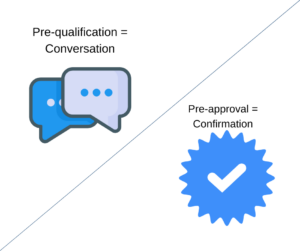
Here’s the easiest way to put it:
➡️ Pre-qualification is a conversation.
➡️ Pre-approval is confirmation.
If you’re planning to buy in 2026, you want the confirmation.
Documents You’ll Need for Pre-Approval
Your lender will typically ask for:
- A valid ID
- Your last 30 days of pay stubs
- W2s from the past 2 years
- 60 days of bank statements
- Proof of assets
- A brief explanation for any large deposits
Being organized makes this process smooth and fast — and it puts you in a much stronger position as you begin your home search.
Step 4 — Choose the Right Realtor
Choosing a Realtor isn’t just about finding someone with a license — it’s about choosing the person who will guide you through one of the biggest financial decisions of your life.
For many first-time and first-generation buyers, the homebuying process can feel overwhelming. There are new terms, new documents, new decisions, and a lot of places where confusion can easily creep in.
The right Realtor makes the process feel clear, safe, and manageable, no matter your experience level.
Why Your Realtor Matters
A skilled and trustworthy Realtor acts as your:
Educator – Breaking down each step so you understand it — not just sign it.
Advocate – Protecting your interests, asking the right questions, and spotting red flags early.
Strategist – Guiding you through pricing, negotiations, taxes, timelines, and local market nuances.
Translator – Explaining the things your lender, attorney, and inspectors may assume you already understand.
Support System – Someone who answers your questions with patience and clarity — especially the questions you may feel nervous or embarrassed to ask.
A great Realtor makes a complicated process feel human, manageable, and doable.
💬 A Note for First-Time & First-Gen Buyers
If you didn’t grow up talking about mortgages at the dinner table or weren’t raised around people who owned homes, choosing the right agent is even more important. You deserve someone who respects your journey, communicates clearly, and never makes you feel behind or unprepared. Your Realtor should help you feel more confident, not more confused.
📝 Questions to Ask When Interviewing Agents
Use these questions to find a Realtor who truly fits your needs:
A. How do you support first-time buyers? – Listen for patience, structure, and education — not just sales talk.
B. How do you communicate with clients? – Do they text? Call? Email? How often? Clear expectations matter.
C. What neighborhoods or suburbs do you specialize in? – Local expertise helps you understand taxes, pricing, inventory, and long-term value.
D. How do you approach negotiations? – Their answer should make you feel protected and prepared.
E. What should I expect from you during the process? – This reveals their standards, availability, and how hands-on they truly are.
💡 Final Thought
You’re not just choosing a Realtor. You’re choosing a guide you’ll depend on for clarity, advocacy, honesty, and confidence. Pick someone who takes the time to educate you, prepare you, and walk with you — not rush you. Pick someone who makes the process feel possible.
Final Takeaway — Yes, You Can Buy a Home in 2026
Homeownership is not reserved for the wealthy. It’s not reserved for the perfect. It’s not reserved for people with flawless credit or massive savings. It is possible for everyday people—with the right plan. You don’t need perfect conditions. You just need preparation, clarity, and guidance. And if homeownership is your goal in 2026, you don’t have to walk that journey alone. I’d be honored to help you get ready.
📘 Download the Confident Buyer Blueprint
Your step-by-step guide to start preparing today.
📩 Book a Buyer Readiness Consultation
Let’s build your personalized 2026 strategy.
Frequently Asked Questions (FAQs)
A: No. Many buyers purchase with 3–5% down, and some programs offer even lower options for eligible buyers. The key is understanding your loan options and talking with a lender early.
A: Ideally 6–12 months before you plan to buy. That gives you time to review your credit, savings, debt, and timeline with a lender and Realtor so you can move confidently when you’re ready.
A: Absolutely. With education, a clear plan, and the right team, many first-gen and first-time buyers become homeowners every year. This guide was written specifically with you in mind.
Damita McGhee is a licensed REALTOR® in Illinois, founder of McGhee Property Group, who helps first-time homebuyers and real estate investors build generational wealth with confidence and clarity.
💬 I’d Love to Hear From You
If you found this guide helpful or if you have questions about any part of the homebuying process, feel free to drop a comment below. Your questions may help someone else who’s feeling the same way — and I’m always happy to help make things clearer.
2 responses to “🏡 Buyer 101: Your Complete Guide to Buying a Home in 2026”
So informative Sis!! Love this ❤
I have few friends not on Facebook in need of this information. I will share with them!! God bless you in all your future endeavors!
Hi Terri. Thank you so much 🥹❤️ That truly means a lot to me. I’m really glad you found it helpful, and I appreciate you sharing it with your friends. That’s exactly why I created it-to help people feel more informed and confident, wherever they are in the process. Thank you for the love and support!